The Best TV Programs of the Year (plus Honorable Mentions)
The Best TV Performances of the Year
Five Great TV Episodes
David's Best Movies of the Year
Andrew's Best Movies of the Year
If I Had an Oscar Ballot...
Five Great Movie Scenes
Showing posts with label BEST OF 2014. Show all posts
Showing posts with label BEST OF 2014. Show all posts
Saturday, January 17, 2015
Friday, January 16, 2015
YEAR IN REVIEW: The 20 best films of 2014
Finally having seen enough to compile my list, below are my top 20 films of 2014. I've ranked the top 10 in order (with a tie, so I guess 11), with six runner-ups discussed in alphabetical order, and the three that round out the top 20 also briefly noted.
Of course, many movies I saw in 2014 didn't make this list. Five that I quite liked but found flawed are discussed here, in the context of a single scene. But otherwise...
Some
have been shortlisted by many other critics. Jean-Marc Vallée’s Wild is smart but nonetheless fell flat
for me, far outdone by John Curran’s Tracks.
Citizenfour and Life Itself were fantastic documentaries – I’m that rare person
that prefers the latter – but unlike the form-bending and emotionally-wrenching
The Act of Killing and Stories We Tell last year, their role as
films didn’t quite outrank my favorite narrative features. Listen Up Philip started out savvy and salty, but deflated by its
third act – seek out a better under-the-radar indie in Lucky Them, as low-key and familiar as it is astute and well-acted.
In a year of stellar debuts – Chazelle’s Whiplash,
Kent’s Babadook, Gilroy’s Nightcrawler – Justin Simien’s Dear White People impressed with its
ideas, but its execution was relatively freshman. Interstellar, its substantial technical merit in mind, tells a
preposterous story without enough oomph. American Sniper is a thinly-drawn superhero movie masked as a morally-minded war movie. And, apparently, I’m the only critic
around that didn’t fall for Ida – its
deliberateness left me cold, even as I admired its confrontational narrative
and lush cinematography.
And
some words on a few “awards” movies; the prestige November-December glut. Still Alice is a mediocre movie that
features one of the year’s best performances – and The Theory of Everything is a mediocre movie featuring a pair of
them. Big Eyes is fine, but it’s
messy and wastes its potential. Into the Woods works sometimes, but director Rob Marshall can't quite bring it together. Unbroken
is the Best Picture of fifty years ago; in 2014, it’s painful to sit through,
going to places we’ve already been without an accompanying reason. The Imitation Game, however, is
surprisingly solid, chastised for its very existence even as it fashions an
intelligent narrative and a sharp style. Beyond these, as always, many movies
favorited by Oscar and other voting bodies happened to be excellent, and are
featured below. Of the rest, I either haven’t screened them just yet, or, more likely, I don’t feel the need to document their absence
(I liked you more than I expected, Begin
Again; I’m still disappointed in you, Monuments
Men).
Last year, the best
film of the year was Steve McQueen’s 12
Years a Slave – my other favorites
were the aforementioned Act of Killing
and Stories We Tell, along with (in
order) Her, Blue Is the Warmest Color, Nebraska,
American Hustle, Short Term 12, Gravity
and Enough Said – and this year it’s Boyhood. For me, this is an unequivocal
choice, and hopefully the reasons I lay out below sufficiently explain why.
On to the Best 20 Movies of 2014 (starting from the top, for once!)...
1) Boyhood – Richard Linklater

The
first time I watched it, I was impressed. How could I not be? How did
Richard Linklater do that? But I didn’t want to be too easy on it. And so, I gave
it a second viewing, two days before Christmas, with my family. The takeaway:
sometimes, judging art purely on how it affects us and makes us feel is okay.
With Boyhood, the specificity of its
story renders its ideas and characters universal and potent. Linklater’s touch
is simply magical. In this epic devoted to growing up, whether into
adolescence, adulthood or middle-age, nothing is simple and yet everything is there.
Linklater's portrait is comprehensive, full, intimate: he captures how we identify change
and growth through the innocuous and mundane. When dad sells his car, you feel
it – you feel him changing, you learn of the congruence of objects and ideas overtime.
When mom goes through yet another disastrous marriage, it hits you hard – that
idea is internalized that sometimes, for some people, you can never really
figure it out.
Linklater’s
script is just perfect, giving equal weight, attention and respect to his
subject Mason (Ellar Coltrane) as he unknowingly punishes his mother as a 13
year-old, or esoterically rambles as he approaches college. You’ll cringe at
his rant on “people say they don’t care about what people think, but they do!”
but you’ll recognize it – you may have even given the same speech. In this way,
Boyhood is a holistic identification of how we come to see and learn about the world. It’s also a
specific and humane conveyance of adulthood. Despite getting married and
settling down, Ethan Hawke’s artistically-minded and sporadically air-headed
father remains easily distinguishable. Despite finding a purpose and a
vocation, and raising two great children, Patricia Arquette’s mother is still
disappointed – “Is this it?,” she cries to her son at the end of the film.
Linklater
has demonstrated a keen understanding of people before – it’s his very appeal.
But in Boyhood, he takes them across
a decade, allows them to change and grow, and still keeps the imperfect spirit
of who they are. I watched my mom’s eyes as the movie played for me a second
time, welled and so deeply touched. It’s how I felt too – I grew up
differently, but I recognized it all, feeling and coming to understand the
world through my parents as Mason did his. There are so many empirical reasons
why Boyhood is great – its vibrantly
authentic dialogue, its scope, its bone-deep performances – but it’s my best
movie of the year because of how it made me feel, watching with the people I
grew up with. That’s what art is supposed to do – probe us, affect us,
challenge us. Boyhood took me back
and thrust me forward. It startled me. It moved me. And, on that second
viewing, it broke me. It’s a breathtaking achievement, and a film that is, at
this moment, very close to my heart.
2) Leviathan – Andrey Zvyagintsev

Andrey
Zvyagintsev’s Leviathan is a
devastating social parable set in contemporary Russia. Its origins are biblical
and philosophical, confronting with piecing naturalism the Social Contract that
exists between Russian authority and its citizens. But Leviathan is not an overt, politicized piece of work – rather, it
stuns with its intimacy. It depicts relationships and characters, in a world in
which their fate is not theirs to choose, and allows us to recognize them and connect
with them. There’s biting, deep humor here, along with painful domestic
conflict. But the exterior is lavish, considering God’s justice and Russian
politics with a critical eye. These characters fall and their relationships
crack, inevitable in such an inescapable system. Zvyagintsev’s societal criticism
is rendered that much more potent as a result of his character-centric approach: with a principal focus on what extraordinary circumstances do to ordinary
people, Leviathan is a true, aching
tragedy.
3) The
Grand Budapest Hotel
– Wes Anderson

With
The Grand Budapest Hotel, Wes
Anderson uses the very specificity of his style to tell a story of greater
scope than he ever has before. In this
narrative-within-a-narrative-within-a-narrative, the director maintains his
commitment to color scheme – this time, purples, reds and yellows – and brings
back his company of actors and set of miniatures in the process. But the
expression here is sharper, deeper and bigger – yet still just as infectious.
The Grand Budapest Hotel
is an idyllic work of art for the way it blends an artist’s worldview with such
all-encompassing, well-trodden ideas in storytelling. This is a film about the
way we tell stories, about the role of war, about changes in culture and mores
across time – and as expressed through Anderson’s rigid camerawork and manic
sense of humor, it’s just brilliantly, memorably different.
4) Mr.
Turner
– Mike Leigh

The
pervasive problem with biopics is their inability to cinematically identify and
grapple with their subject(s) work – with one big exception in Mike Leigh’s
filmography, first with Topsy-Turvy
and now Mr. Turner. Here, in his
recounting of 19th Century British painter J.M.W. Turner’s later
years, Leigh finds a way to answer that subjective question: how does an artist
see the world? His camerawork is less an effort in moviemaking than a sequence
of paintings, capturing the world in all its detail – often breathtakingly
beautiful, sometimes lightly disturbing, and occasionally morbidly funny – with
expansive splendor. His subject, portrayed superbly by Timothy Spall, is gruff
and socially inept, mining humanity and perspective through the world’s natural
tableaux. Leigh’s confidence, laying out details of Turner’s life without
judgment or overt exposition, allows his subject to just be. He contends with
the individual and the work in a way I’ve seen few filmmakers capable, and his
dialogue remains as sharply characteristic as ever. As I wrote in my review, Mr. Turner is not a masterpiece: it’s a
series of masterpieces.
5) Two Days, One Night –
Jean-Pierre Dardenne & Luc Dardenne

Two Days, One Night
tackles contemporarily-focused ideas about class, decency, sacrifice and self-worth
with unwavering realism. Its conceit practically gives away its thematic value
and narrative progression: Sandra (Marion Cotillard) must visit with each of
her co-workers, and ask them to forgo their bonuses so that she can keep her
job. She steps into the lives of the generous, the entitled and the struggling –
with each visit shakily lensed in a single-take, progressing in
documentary-like fashion. The evocation is mammoth. Cotillard acquits herself
astonishingly well in a performance that requires so much to go unsaid – her stilted
walk, her timid eyes and her quivering mouth convey what words cannot. And the
film, so raw and honest in its intricate depiction of humanity, makes a vital claim
for decency and humility. Stripped of visual tricks and musical composition,
the Dardenne Brothers manage once again to deliver a stirring piece of
humanist cinema.
6) Selma – Ava DuVernay

Ava
DuVernay’s expressive, sweeping Selma
is directly antithetical to our expectations of historical drama. Rather than overloading
with notes and factoids, the director exhibits striking confidence in her
camera and her actors. A still image of silent protestors will fade into a gentle
tracking shot, of millions marching for the right to vote. The camera will stay
soft and fixed for minutes at a time, in a room with Martin Luther King (David
Oyelowo, brilliant) and his wife Coretta (Carmen Ejogo), completely comfortable
in silence and deep emotion. This is Selma’s
indispensability. It tackles and confronts history, but hands its story to the
people: a flawed leader, a unified community, an activist spirit. Its
contemporary relevance is steeped in that unconventional approach, in the way
it so generously and fully identifies the role of community and solidarity in
fighting something larger than oneself. Moving, complicated and startlingly
realistic, Selma is the historical drama
we’ve long been waiting for.
7) Inherent
Vice
– Paul Thomas Anderson
Inherent Vice
is a sublime concoction of zany romantic nostalgia, as only director Paul
Thomas Anderson could envision and pull off. His adaptation of Thomas Pynchon’s
book of the same name is admirably faithful, and yet totally his own – it’s a
spotty, incoherent detective story that makes magic moment-to-moment,
cameo-to-cameo. It’s not totally funny nor especially heavy, and yet it
possesses a vitality and spark rooted in its point-of-view and enchanting
idiosyncrasy. Obviously, this is a filmmaker of considerable talent, but here
he underscores a colorful collection of scenes with levity and perspective,
mourning for a time and a community changed and vanished. The comedy
and cast – highlights include Martin Short as a lunatic dentist and Jena Malone
as a drug-addict loner – draw attention and provide Inherent Vice with its substantial entertainment value. But tuning
in to what Anderson has to say, and gazing in awe at the mastery with which he
communicates it, is the film’s unexpected treat.
8) Love
Is Strange
– Ira Sachs
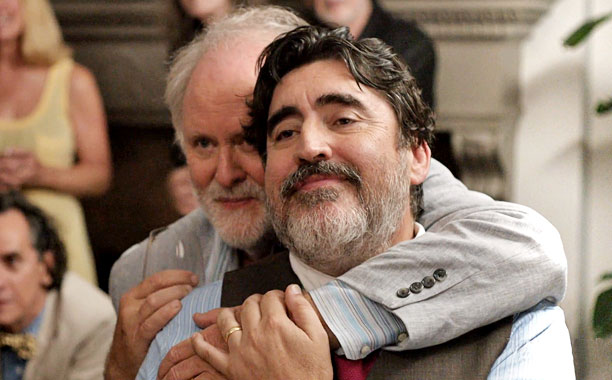
It’s
hard to believe that Ira Sachs, fresh off the sexy and dark (and flawed) Keep the Lights On, could so sharply
turn a corner with Love Is Strange
and do it so damn beautifully. Ostensibly confronting the perpetual complications
of gay marriage in America, the bigger and impassioned idea here is an exultant
ode to love and commitment. Sachs’ focus on the enduring love of an elderly
couple, played by Alfred Molina and John Lithgow in career-best performances,
eventually extends to the ongoing struggles between married people of
middle-age, and to a teen’s reluctance in pursuing his first crush. Treasured
are the stories that just hit you, that move you – Love Is Strange is exactly that. It’s freewheeling, as loose and
unrefined as life. It’s sad, acknowledging the inevitability of loss with
grace. And it’s timeless, explicating the complicated role that love plays in
our lives, young and old, and demonstrating its wondrous eternality as a
result.
9) Force
Majeure
– Ruben Ostlund
In
terms of sheer intelligence, few 2014 works were as effectively brainy as Ruben
Ostlund’s Force Majeure.
The film posits the role of men and women, generation by generation, in a
changing world. A freak incident – a “force majeure” – leads to ninety minutes
of husbands, wives, boyfriends and girlfriends arguing incessantly and
senselessly. By its conclusion, the movie’s methods of communication – from the naturalism of the
performances to the oblivion-like elicitation in the cinematography – just blew
me away. It situates a traditional family up and away in a ski resort, and
aggressively introduces them to new ways of thinking, pushing them to reflect
on who and what they are. In wrestling so naturally with modernity, gender,
family and aging, Force Majeure
viscerally (and hilariously) exposes the absurdity of the human condition.
10T) The
Babadook –
Jennifer Kent

This
stunning, wholly unexpected conception of parental rage and suppression ranks
as the year’s best debut. Ms. Jennifer Kent inverts the approach taken in
horror film to create a devastating cinematic opera – the tired trope of the
demonized mother is taken literally, as Amelia’s (Essie Davis) tormented core is
fashioned as an ethereal monster called “The Babadook.” Kent’s control here is astonishing,
presenting a chillingly frightening vision while never wavering in the complex focus
on motherhood and repression. The conveyance here is overtly feminist, providing
its protagonist with uncommon agency as a sexual being and anguished griever –
and yet, the viewing experience is both completely engrossing and beguilingly innovative.
By so fully succeeding in balancing the tragic with the scary, this production
is an across-the-board class act – though it’s Ms. Davis’ fearsome performance that
makes it all work so well, going to a plethora of emotional places with
fearsome commitment.
10T) The
Immigrant
– James Gray
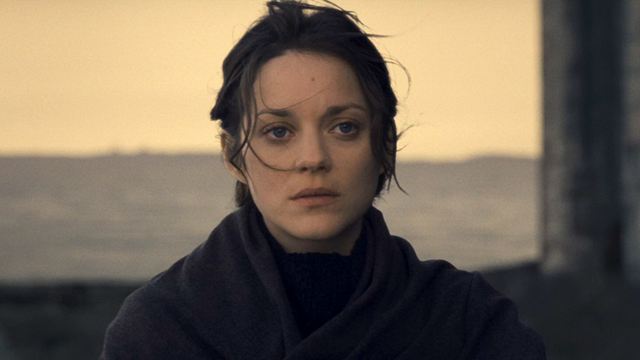
The Immigrant
is an uncompromising cinematic experience. Director James Gray revels in
melodrama and classicism, evoking a tragedy of profound feeling that’s both
distinctive and rare for the way it wears its heart on its sleeve. The film
chronicles the plight of Marion Cotillard’s helpless Polish immigrant; Gray
observes her downfall with unsettling sincerity, and lightly albeit intently
acknowledges the corruption and amorality that surrounds her. Of course, this
“corruption” is directly representative of the time, feeding into the film’s
dark interpretation of the American immigrant experience as well as its
broader, nationalistic implications. As Cotillard digs so fearlessly into her character’s
desperation, The Immigrant is a heavy
watch, sad and unabashedly tragic – and yet, bleak as it may be, this is a
beautiful and impressionistic piece of cinema, emotive and connective quite
unlike anything this year.
Six Runner-Ups:
Foxcatcher – Bennett Miller

For
all the talk surrounding the cold and collected auterism of Gone Girl, it’s really Bennett Miller’s Foxcatcher that sustained a mood of
shaky unease better than anything else this year. If Gone Girl wandered aimlessly, Foxcatcher’s
shoes were superglued to the ground. In this pointed conflation of American
masculinity and patriotism, a trio of actors playing against type – Steve
Carell, Mark Ruffalo, Channing Tatum – brilliantly immersed themselves in
Miller’s immaculately-controlled vision. This is unrelenting cinema, willing
you to dive into its world of ever-looming tragedy. With his latest, Miller
remains fascinated by basic conversation – between a storyteller and a murderer
in Capote; an old-fashioned
ballplayer and an academic statistician in Moneyball;
and a wealthy, creepy ornithologist and an undervalued, boorish wrestler in Foxcatcher – and continues to expose
American men and their relationships at their rawest, with a quiet and brutal
intensity.
A
Most Violent Year
– J.C. Chandor
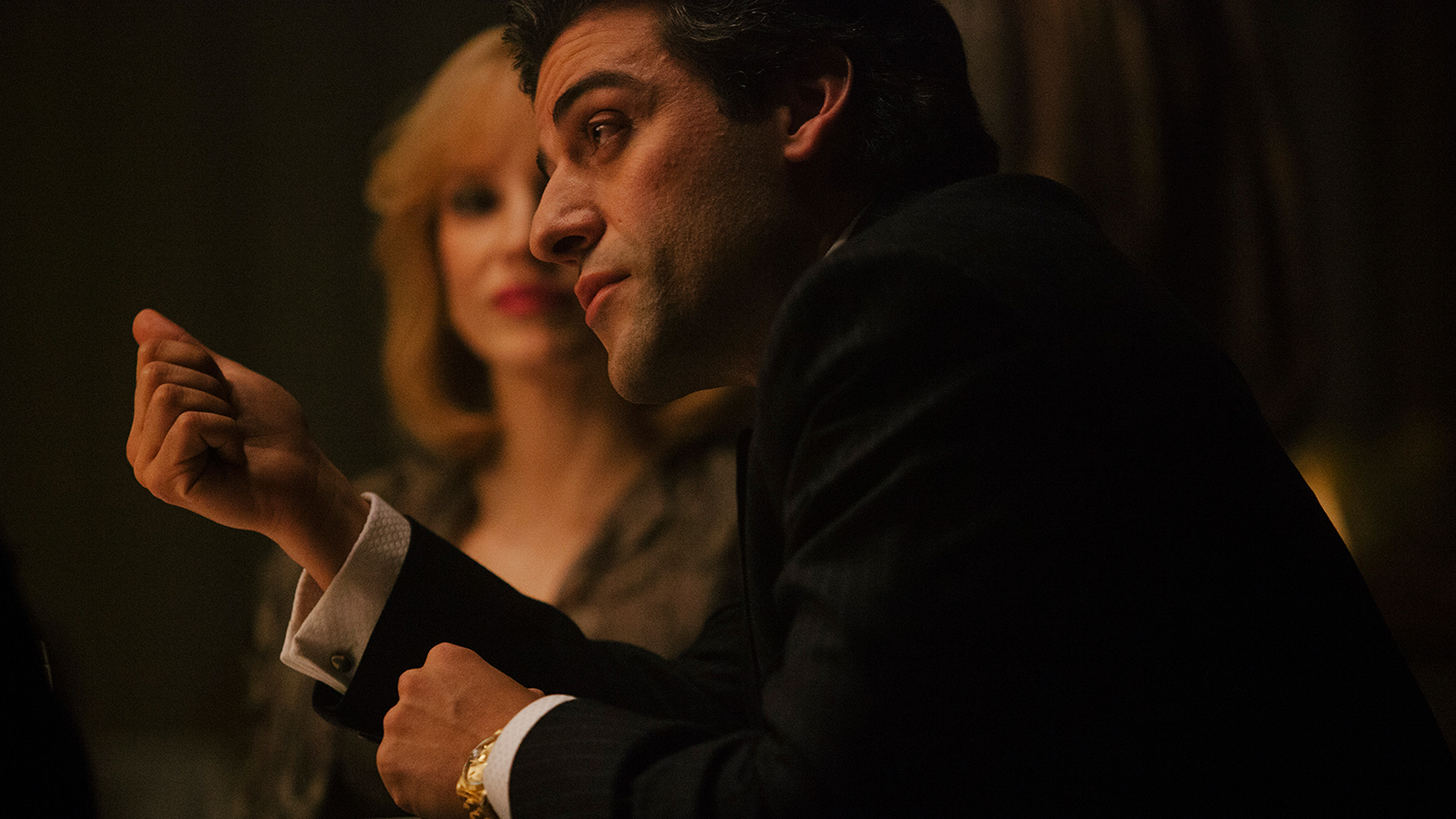
Through
his early years as a director, J.C. Chandor has been experimenting with form. Margin Call was admirably
claustrophobic; All Is Lost felt
boundless. A Most Violent Year
borrows from both, keeping within a city breeding violence as its protagonist
goes after a piece of land located on the water, where he can expand and bring
in the whole world. But the film’s great achievement is taking on a timeless
idea – the paradox of the American entrepreneurial spirit – and spinning it
attentively and originally. Chandor is an especially thoughtful storyteller,
understanding with necessary nuance the relationship between those above and
those below, and the ways in which those at the top perpetuate – and yet are
mired by – decay. In refreshingly condemning violence by exposing its horror
and its roots, A Most Violent Year is a film of unnerving relevance and visual
intelligence.
Obvious
Child
– Gillian Robespierre
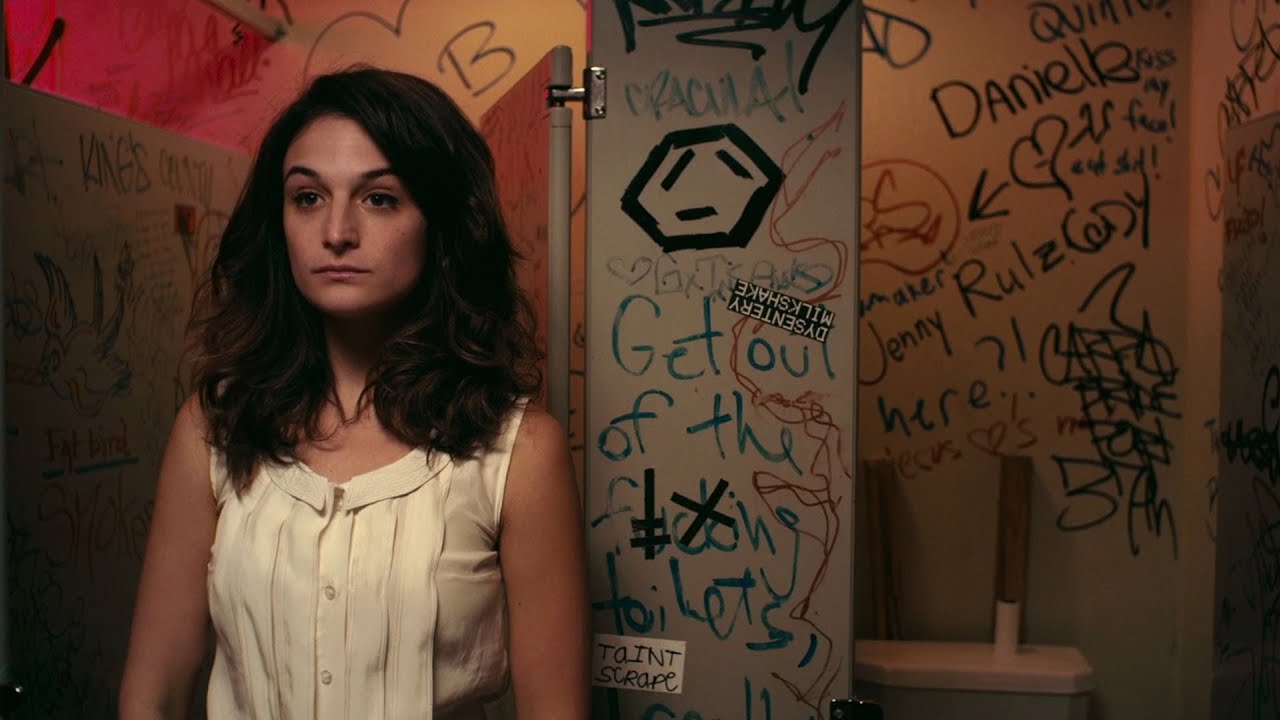
This
summer surprise withstood a vast slate of flashier fare to stay in memory. Adapted from director Gillian Robespierre’s
short film, Obvious Child is that
“abortion” movie that infiltrated headline space simply for confronting such a
subject with considered authenticity. But it’s much more – chiefly, a
buoyantly enjoyable comedy unafraid to tread the less-respected terrain of
gross-out humor and cutesy romance. Jenny Slate is revelatory in the leading
role, bare and vulnerable and yet exuberantly comedic, as few are in
contemporary movies. On television, Lena Dunham has effectively subverted
lowbrow comedy, and Mindy Kaling the romantic comedy – Ms. Robespierre’s great
triumph is her reclaiming of those tropes for the movies, in a fashion both
effortlessly feminist and consistently funny. There were bigger movies than Obvious Child in 2014, but few were as gratifying.
Only
Lovers Left Alive
– Jim Jarmusch
After
enduring a half-decade’s worth of Hollywood obsessing over vampire romance, Jim
Jarmusch’s mellow and contemplative Only
Lovers Left Alive arrives as distressingly unique. How, between Twilight and True Blood and The Vampire
Diaries and everything else, has no one actually dealt with the passage of
time vis-à-vis centuries-old vampires? Intimate, intelligent and raucously
retro, Mr. Jarmusch’s accounting of a bohemian vamp romance is a moody foray
into humanity’s cyclicality and art’s durability. Tilda Swinton and Tom
Hiddleston do great, understated work as the couple in question, and Mia
Wasikowska explodes in an against-type turn as a misbehaving little (albeit
still some-hundred-year-old) sister. Through Jarmusch’s characteristically
spooky and musical lens, Only Lovers Left
Alive tackles change and time with a soothing soundtrack and a world-weary perspective.
And by texturing barren Detroit and familiar family dynamics in a most
Jarmusch-ian template, the finished work erupts as both liberally observed and
artistically vibrant.
Tracks – John Curran
Did
everyone forget about this movie? John Curran’s absorbing Tracks is an understated exploration of isolation and outcast-ism. In following Robyn Davidson’s
(Mia Wasikowska) trek across the Australian outback, it’s a reclamation of
humanity, of one’s ability to find that elusive sense of self when surrounded
by nothing but the world. Unlike the connect-the-dots method of Wild, Curran opts not to give us the how
and the why. Robyn simply goes on. The
versatile Wasikowska strips herself of vanity and pretension, beautifully conveying a sense of loss and displacemen. Tracks may use verbal exchanges sparingly, but it’s richly
communicative and comprehensive, with sprawling cinematography and a complimentary
score aiding in the melding of big and small, humanity and nature, peace and loneliness.
Whiplash – Damien Chazelle

In
a year of audaciously confident debut features, Mr. Damien Chazelle’s kinetic Whiplash still manages to stand out. It
moves at an ever-quickening pace, managing to ratchet up the tension and effectively
close in on its abusive mentor-mentee relationship in the process. Here’s a
movie that thrillingly figures it out on the fly – undercooked side stuff
aside, Chazelle’s work is wholly compelling by the time he reaches the final
act, in a sequence so tight and frightening that it puts bigger-budget
heart-racers to shame. The performances from Miles Teller and J.K. Simmons are
big, bold and bloody, and Tom Cross’ editing is as taut and suspenseful as just
about anything released this year. There’s a lot to like in Whiplash, but it’s the alternately
spellbinding and exhausting theatrical experience that makes it something truly
special.
And the final 3...
Birdman
or (The Unexpected Virtue of Ignorance):
Alejandro González Inarritu’s awards darling is a ravishing exercise in
technical virtuosity. Not as deep as it thinks it is, but it’s got a splendid
cast and is seriously entertaining.
Nightcrawler: A taut Los Angeles noir, featuring a crazy-good Jake Gyllenhaal. One of the year's better-crafted thrillers, even if it squanders some thematic potential.
Starred Up: A propulsive, enthralling Irish prison drama, featuring blistering performances from Jack O’Connell and Ben Mendelsohn. One of 2014’s most unsung films.
Starred Up: A propulsive, enthralling Irish prison drama, featuring blistering performances from Jack O’Connell and Ben Mendelsohn. One of 2014’s most unsung films.
Friday, January 9, 2015
OSCARS: If we had an Oscar ballot...
Oscar voting concluded yesterday, with nominations set to be announced on Jan. 16.
Before we post our Top 10s and honorable mentions, however, Andrew and I decided we'd have a crack at our own "ballots." Listed below are our own personal rankings for select categories. We abided by Oscar rules (that is, we only rank five contenders per category, and only consider those the Academy has deemed "eligible"), and opted out of categories where we either didn't see enough (animated film, for instance) or where we didn't have enough of an opinion (sound mixing).
Our personal Oscar ballots are listed below. Choices are ranked in terms of preference, with runner-ups listed alphabetically. Pictured are our either consensus or individual winners.
BEST PICTURE
 |
| Not much debate here. Boyhood gets our vote easily. |
David:
1. Boyhood
2. Leviathan
3. The
Grand Budapest Hotel
4. Mr.
Turner
5. Selma
Runner-ups: Force Majeure; Inherent Vice; Two Days, One Night
Andrew:
1. Boyhood
2. The
Grand Budapest Hotel
3. Selma
4. Mr.
Turner
5. Love
Is Strange
Runner-ups:
The Babadook; Foxcatcher; The Immigrant
BEST DIRECTOR
 |
| Andrew went for Richard Linklater's 12-years-in-the-making effort, while David couldn't resist honoring Wes Anderson's finest directorial achievement to date. |
David:
1. Wes Anderson for The Grand Budapest Hotel
2. Andrey Zvyagintsev for Leviathan
3. Richard Linklater for Boyhood
4. Mike Leigh for Mr. Turner
5. Ava DuVernay for Selma
Runner-ups:
Jennifer Kent for The Babadook; Ruben
Ostlund for Force Majeure; Paul
Thomas Anderson for Inherent Vice
Andrew:
1. Richard Linklater for Boyhood
2. Wes Anderson for The Grand Budapest Hotel
3. Mike Leigh for Mr. Turner
4. Ava DuVernay for Selma
5. Ira Sachs for Love Is Strange
Runner-ups:
Jennifer Kent for The Babadook;
Bennett Miller for Foxcatcher; Paul Thomas
Anderson for Inherent Vice; Damien
Chazelle for Whiplash
BEST ACTOR
 |
| David Oyelowo's passionate, specific MLK won David over, while Benedict Cumberbatch's transformative Alan Turing was a clear choice for Andrew. |
David:
1. David Oyelowo of Selma
2. Timothy Spall of Mr. Turner
3. Ralph Fiennes of The Grand Budapest Hotel
4. Benedict Cumberbatch of The Imitation Game
5. Oscar Isaac of A Most Violent Year
Runner-ups: Jake Gyllenhaal of Nightcrawler; John
Lithgow of Love Is Strange; Joaquin
Phoenix of Inherent Vice; Aleksey Serebryakov of Leviathan
Andrew:
1.
Benedict Cumberbatch of The
Imitation Game
2.
Timothy Spall of Mr. Turner
3. David
Oyelowo of Selma
4. Ralph
Fiennes of The Grand Budapest Hotel
5. John
Lithgow of Love Is Strange
Runner-ups: Bill Hader of The Skeleton Twins; Michael Keaton of Birdman; Eddie Redmayne of The
Imitation Game; Miles Teller of Whiplash
BEST
ACTRESS
 |
| David wouldn't hear an argument against Marion Cotillard for her expressive performances in The Immigrant and Two Days, One Night, but Andrew was set on Essie Davis' haunting work in The Babadook. |
David:
1. Marion
Cotillard of The Immigrant / Two Days, One Night
2.
Julianne Moore of Still Alice
3. Anne Dorval of Mommy
4.
5. Mia Wasikowska of Tracks
Runner-ups: Amy Adams of Big Eyes; Rosamund Pike of Gone
Girl; Jenny Slate of Obvious Child; Tilda Swinton of Only Lovers
Left Alive
Andrew:
1. Essie
Davis of The Babadook
2.
Julianne Moore of Still Alice
3. Marion
Cotillard of The Immigrant
4. Jenny Slate
of Obvious Child
5. Gugu
Mbatha-Raw of Beyond the Lights / Belle
No runner-ups.
BEST
SUPPORTING ACTOR
 |
| Beginning to end, J.K. Simmons held you and didn't let you go. This pick was a fast one. |
David:
1. J.K.
Simmons of Whiplash
2. Ben
Mendelsohn of Starred Up
3. Steve
Carell of Foxcatcher
4. Roman
Madyanov of Leviathan
5. Mark
Ruffalo of Foxcatcher
Runner-ups: Josh Brolin of Inherent Vice; Ethan Hawke of Boyhood;
Joaquin Phoenix of The Immigrant;
Tim Roth of Selma
Andrew:
1. J.K.
Simmons of Whiplash
2. Steve
Carell of Foxcatcher
3. Ethan
Hawke of Boyhood
4. Alfred
Molina of Love Is Strange
5. Tim
Roth of Selma
Runner-ups: Josh Brolin of Inherent Vice; Joaquin Phoenix of The Immigrant; Mark Ruffalo of Foxcatcher;
Tom Wilkinson of Selma
BEST
SUPPORTING ACTRESS
 |
| The grounding force of Boyhood, Patricia Arquette's emotionally bare expression of motherhood towered over the competition. |
David:
1. Patricia
Arquette of Boyhood
2.
Elisabeth Moss of Listen Up Philip
3. Tessa
Thompson of Dear White People
4. Laura
Dern of Wild
5. Tilda
Swinton of Snowpiercer
Runner-ups: Marion Bailey of Mr. Turner; Carmen Ejogo of Selma; Rene Russo of Nightcrawler;
Katherine Waterston of Inherent Vice
Andrew:
1. Patricia
Arquette of Boyhood
2.
Felicity Jones of The Theory of
Everything
3. Tessa
Thompson of Dear White People
4.
Elisabeth Moss of Listen Up Philip
5. Marion Bailey of Mr. Turner
No runner-ups.
BEST
ORIGINAL SCREENPLAY
David:
1. The Grand Budapest Hotel, written by Wes
Anderson & Hugo Guinness
2. Two Days, One Night, written by Jean-Pierre Dardenne & Luc Dardenne
2. Two Days, One Night, written by Jean-Pierre Dardenne & Luc Dardenne
3. Love Is
Strange, written by Ira Sachs & Mauricio Zacharias
4. Boyhood, written by Richard Linklater
5. Force Majeure, written by Ruben Ostlund
Runner-ups: Foxcatcher, written by E. Max Frye & Dan
Futterman; The Immigrant, written by Rick Menello & James
Gray; Leviathan, written by Andrey Zvyagintsev & Oleg Negin; Mr. Turner, written by Mike
Leigh
Andrew:
1. The Grand Budapest Hotel, written by Wes
Anderson & Hugo Guinness
2. Boyhood, written by Richard Linklater
3. Mr. Turner, written by Mike Leigh
4. Love Is Strange, written by Ira Sachs
& Mauricio Zacharias
5. Selma, written by Paul Webb (included
considering the profound alterations by Ava DuVernay…)
Runner-ups: Foxcatcher,
written by E. Max Frye & Dan Futterman; The
Immigrant, written by Rick Menello & James Gray; The Skeleton Twins, written by Mark Heyman & Craig Johnson
BEST
ADAPTED SCREENPLAY
David:
1. Inherent Vice, written by Paul Thomas
Anderson
2. Obvious Child, written by Karen Maine
& Elisabeth Holm & Gillian Robespierre
3. Snowpiercer, written by Bong Joon-Ho
& Kelly Masterson
4. Whiplash, written by Damien Chazelle
5. The Imitation Game, written by Graham
Moore
Runner-ups: Gone
Girl, written by Gillian Flynn; Tracks,
written by Marion Nelson; Wild,
written by Nick Hornby
Andrew:
1. Whiplash, written by Damien Chazelle
2. Obvious Child, written by Karen Maine
& Elisabeth Holm & Gillian Robespierre
3. Inherent Vice, written by Paul Thomas
Anderson
4. Tracks, written by Marion Nelson
5. The Imitation Game, written by Graham
Moore
No runner-ups.
BEST
CINEMATOGRAPHY
David:
1. Dick
Pope for Mr. Turner
2.
Emmanuelle Lubezki for Birdman
3.
Mikhail Krichman for Leviathan
4. Robert
Elswitt for Inherent Vice
5. Bradford
Young for Selma
Runner-ups: Darius Khondji for The Immigrant; Radek Ladczuk for The Babadook; Fredrik Wenzel for Force Majeure; Robert Yeoman for The Grand Budapest Hotel
Andrew:
1. Robert
Yeoman for The Grand Budapest Hotel
2. Dick
Pope for Mr. Turner
3.
Bradford Young for Selma
4.
Emmanuelle Lubezki for Birdman
5. Robert
Elswitt for Inherent Vice
No runner-ups.
BEST
FILM EDITING (David only)
1.
Douglas Crise & Stephen Mirrione for Birdman
2. Sandra
Adair for Boyhood
3. Tom
Cross for Whiplash
4. Leslie
Jones for Inherent Vice
5. John
MacMurphy & Martin Pensa for Wild
Runner-ups: John Gilroy for Nightcrawler; Gary D. Roach & Joel Cox for American Sniper; Jake Roberts & Nick Emerson for Starred Up
BEST
ORIGINAL SCORE (David only)
1. Hans
Zimmer for Interstellar
2.
Atticus Ross & Trent Reznor for Gone
Girl
3.
Alexandre Desplat for The Grand Budapest
Hotel
4. Alex
Ebert for A Most Violent Year
5. Mica
Levi for Under the Skin
Runner-ups: Alexandre Desplat for The Imitation Game; Keegan DeWitt for Listen Up Philip; Jonny Greenwood for Inherent
Vice
BEST
PRODUCTION DESIGN (David only)
1. Adam
Stockhausen & Anna Pinnock for The
Grand Budapest Hotel
2. Kevin
Thompson & George DeTitta Jr. for Birdman
3.
Josefin Asberg for Force Majeure
4. Nathan
Crowely & Gary Fettis & Paul Healy for Interstellar
5. David
Crank & Amy Wells for Inherent Vice
Runner-ups: James Chinlund & Amanda Moss
Serino for Dawn of the Planet of the Apes;
Suzie Davies & Charlotte Watts for Mr.
Turner; Jon Hutman & Lisa Thompson for Unbroken
Subscribe to:
Posts (Atom)