Tuesday, February 3, 2015

Television review: Checking in on HBO half-hours GIRLS, TOGETHERNESS and LOOKING

(HBO)
Girls

There’s an air of pointlessness clouding Girls at this point.

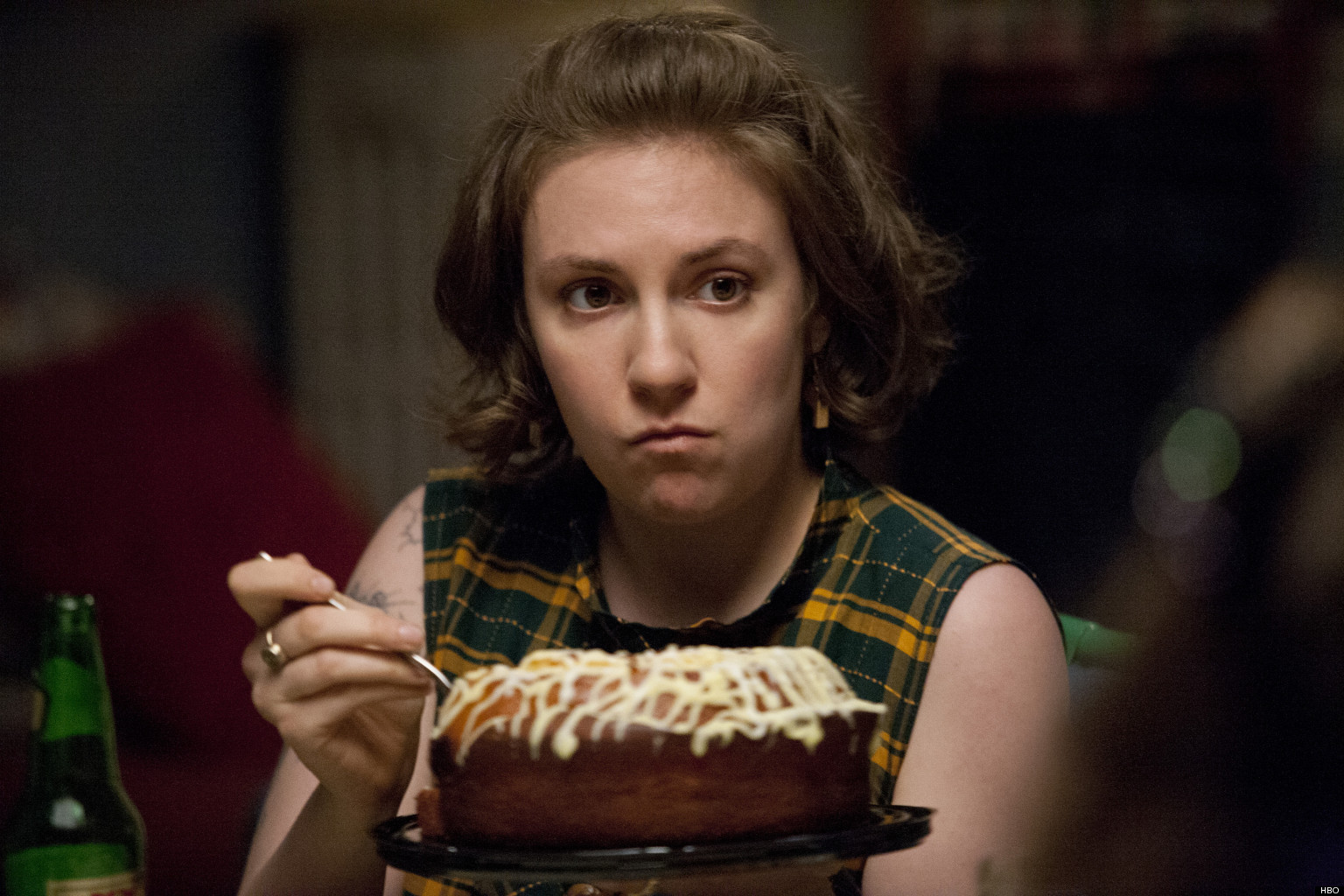
Though Lena Dunham remains intellectually-engaged with her breakout half-hour, the currently-airing fourth season is landing flat. This was never an especially comedic or dramatic series – its creative juice has long been mined from the perceptiveness in its ideas and language – but at this stage, it seems to be weightlessly humming along. There’s a thematic unity in the predicaments faced by Hannah (Dunham), Marnie (Allison Williams), Jessa (Jemima Kirke) and Shoshanna (Zosia Mamet) alike – they’re in definitive moments, where they can either make a serious leap forward or regress once again – and, occasionally, there’s an inspired, biting engagement, as in the goings-on at the Iowa Writers Workshop. Even at its least cohesive, no one should accuse of Girls of being stupid. But with Marnie drowning in a romantic subplot, and Jessa coming out of another slight, inconsequential storyline, and Shoshanna entering the working world, Dunham’s work isn’t cohesive right now; rather, it’s awkwardly segmented.

Girls has never seriously developed its characters, and part of that is the point: one, these characters are stuck; and two, evolutions in the relationships are what chiefly matter to Dunham as a storyteller. The problem, then, is this: the characters are mostly separated right now, and they’re just not interesting enough. They lack gravitas, depth – and they’re not particularly funny, either. Girls appears trapped within a cynical, finite premise about a group of friends falling out and drifting apart. The show is perpetuating this conceit and therefore is dependent on our investment in its characters’ individual challenges. But we have no real reason to invest if what’s going on isn’t especially funny, or romantic, or profound. This may be a show that just doesn’t age that well; crafty dialogue and a contemporary feel can only get you so far. But there’s no sense of history – remembering what Jessa did in season two takes a minute, and when you finally do, you realize it doesn’t even matter – and so, when things are naturally slower, Girls is an excessively uninvolving experience. Thank God Elijah (Andrew Rannells) comes around every so often to spice things up a little bit. C+


Togetherness

The Duplass Brothers don’t really transcend. The appeal of their work, and the joy of experiencing it, is derived from its lived-in nature. As writer-directors, Mark and Jay put beautifully naturalistic dialogue on the page and, when behind the camera, translate it to the screen with unmistakable intimacy and subtle verve. But as far as slices-of-life go, they don’t take that artistic leap, as we’ve seen Jill Soloway do on television with Transparent or as Ira Sachs did in film last year with Love Is Strange. Even so, I’d argue television is an optimal format for them, and thus far, Togetherness is working quite well as a result.

I’m struck by how quickly the series has created a lush sense of familiarity and comfort with its characters; the Duplass team is bouncing them off of each other as most shows typically do in later seasons, when the groundwork has been laid. In Togetherness, between the beautifully grounded performances of its quartet, everything already feels ripe to explore. The series’ third episode, as an example, focuses individually on Melanie Lynskey’s Michelle, who decides to take a night out for herself rather than join her husband and friends at a party. Lynskey is so connective as an actress that she, just 90 minutes in, feels remarkably fleshed-out; as such, watching Michelle patrol nighttime Los Angeles is an evocative, gently informative experience about where she is in her life, and what’s going on with her internally. It’s a perfect example of what the show does with all of its characters, softly subverting the archetypes they ostensibly fit as.

Each episode works as a slight, intimate experience, and at this stage, they work best as standalone half-hours. There’s less of an overriding intent here than in a Transparent; Togetherness is more about a feeling, and an ongoing exploration of people at a certain place at a certain time in their lives. Like Duplass films, this series is not especially thick. But it retains their rich, innate realism and specificity, and the episodic format is rendering their work more streamlined, effectual and resonant. B+


Looking

In the second season premiere of Looking, Patrick (Jonathan Groff) and friends attend a massive gay party in the woods of Northern California. The episode up to that point had been pleasantly unremarkable, but in comes director Andrew Haigh’s Steadicam shot: against the music, he pans around the scene, inviting into his frame an impenetrable sense of joy as an incredibly diverse community comes together. The camera captures it all, and the sensation is irresistible.

Looking may be the most visually-adventurous (and imaginative) half-hour on the air, as beyond the mastery with the camera, Haigh and his team make fascinating choices: I haven’t seen sex scenes filmed with such a combination of naturalism and eroticism as they are here, and as touched on with that moment at the party, Looking’s framing choices are blessedly inventive. Haigh is a filmmaker turning to television, and so you can understand where his strengths and weaknesses stem from. Looking just doesn’t have the bones of a television show. Surrounding Groff’s likeably dorky Patrick are a collection of thin characters doing mostly uninteresting things (though Lauren Weedman’s Doris can do just about anything and we’ll smile, I’ll concede). I’ve put aside my confusion as to how Patrick, Augustin (Frankie J. Alvarez) and Dom (Murray Bartlett) became best friends, but there’s an ongoing problem: these actors just don’t have the chemistry with each other that you see within the cast of Togetherness or even Girls.

But the show is making strides. In particular, its fluency has come through more in Patrick’s affair with his boss, Kevin, as there’s a weight behind both their banal conversations and their more intimate encounters. And the show is skirting around, with a bit more deliberateness, the sexual tension between Dom and Patrick – you’re finally getting a sense of something there. But Looking is sorely lacking in a strong foundation; it still can’t confidently or successfully weave between characters and relationships, even in its second season. It’s a bit stoic, and is yet to delve deep. But if Haigh’s narrative work is still defined by a collection of unintegrated parts, he holds you with profound image-based communications. Looking possesses a unique vivacity in that way: it’s pretty darn masterful when, you know, nobody’s talking. B

Monday, February 2, 2015

Review: MOMMY

Roadside

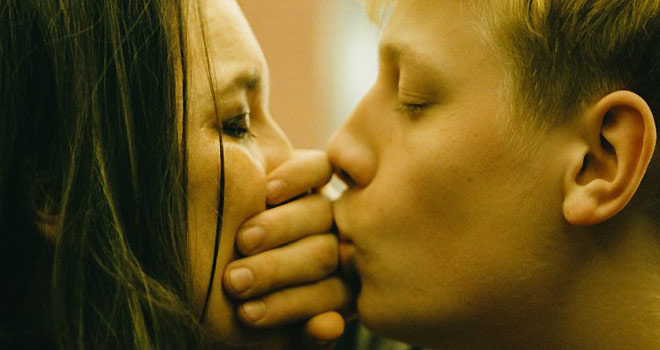
Mommy is Xavier Dolan’s fifth feature, about a single mother, Diane (Anne Dorval), struggling to take care of her over-active and mentally-challenged son, Steve (Antoine Olivier Pilon). Add into the mix neighbor Kyla (Suzanne Clement), a stay-at-home mother who tutors Steve. She becomes attracted to this boisterous and messy relationship and embroiled in the heated triad. Meanwhile, Diane must contend with a choice she must make: will she commit her son into an institution? With her son, she cannot work because taking care of him is a full-time job, a constant responsibility.

This movie centers on its characters’ delusions and fantasies: the Oedipal attraction Steve harbors towards his mother, Diane’s belief that she can live in peace with her son, and Kyla’s desire and secret wish to live a life as thrilling as the one that unfolds before her throughout the film.

The film’s comedy is its drama, its sadness is its joy, its abuse is its love. Steve is a dominating presence, a character capable of extreme empathy and intolerable cruelty. The beauty of the mother/son relationship is its cynicism, where the harshest insults are quotidian realities, a relationship as strong and durable as it is tempestuous and poisonous. Dolan cleverly and humanely shows us Diane’s emotional limits; when she’s happiest with Steve, she ignores the lawsuit altogether and pretends it’s all right. Only then, do we realize that she isn’t going to be able to sustain this relationship for very long.

The film alternates its narrative perspective between Diane and Steve. Dolan doesn’t have a primary protagonist, preferring the vague atmospheric tensions both characters provide equally. Steve seems blissfully unaware his mother can commit him at any time; Diane, meanwhile, represses the foreboding knowledge. They are characters that complement each other well. But the idea mainly works on paper – there’s just too much that distracts from the central relationship.

Kyla doesn’t feel necessary to what Dolan is trying to say with Mommy – Clement is a great actress, and the character doesn’t necessarily detract. Her presence adds an off-kilter energy with welcome doses of humor. Nevertheless, stuff with her doesn’t entirely gel into the movie’s central story. By the end of the film, when Kyla is telling Diane she is leaving for Toronto, it’s not an emotionally-compelling moment. These are great actresses, yet Dolan is unable to offer us the focused structure to make a moment like that land.

The best tableaux the film provides is the dancing scene, in which all three characters are in the kitchen swaying to the melody. If there weren’t three other montages, I would call it something truly special. But that scene comes off like reincarnations of other montages, and thus its effectiveness is substantially limited.

Dolan shoots the movie in a 1:1 ratio, which creates an appropriately claustrophobic mood. It's an interesting choice, one that works in the beginning but is inconsistently applied. Dolan’s free-wheeling instinct to occasionally expand the screen is not thought-out enough, detracting from story at hand. Why complicate when you can illuminate?

Mommy never registers a false note, but it has a lack of focus, inexhaustible emotions, an inconsistent style and an overly-long running-time. Dolan’s fifth film is a missed opportunity that remains a bold and admirable effort. Here is a filmmaker steadily improving with immense skill and empathy, an ability to elicit powerful performances, write dynamic dialogue and create a strong visual palette. This was a frustrating viewing experience because Dolan is supremely talented – he just needs to get out of his own head.

Grade: B (and an A- for the performances)

Film review: MOMMY

(Roadside Attractions)
There’s a fervent spirit to Xavier Dolan’s wildly-uneven Mommy, exuding passion and helping to maintain an emotional resonance throughout even as the movie itself never completely works. Dolan, a filmmaker in his 20s, demonstrates extraordinary raw talent as well as some age-related limitations; the director achieves a depth of feeling many twice his age would be glad to reach, but his approach is also overwrought and lacking in a particular kind of confidence.

Mommy, predominantly and unusually shot in a 1:1 aspect ratio, is coarsely authentic and specific. Dolan’s words and phrasing spill out of actors like perverse poetry, a playful “fuck” here, a profanity-laden tirade there. This film – in which Diane (Anne Dorval) struggles to hold it together after her severely-ADHD-plagued adolescent son Steve (Antoine-Olivier Pilon) returns home – understands that words convey everything: familiarity, resentment, pain, uncertainty, fear. Dolan is immensely skillful with such elicitations: Steve’s psychotic episodes get under your skin less because they intimidate, and more because they radiate a harrowing vulnerability. Instances like this remind that Steve and Diane, with such distinct dialects and senses of humor and expressions of intimacy, are uncommon to the cinematic landscape. Their gritty, make-ends-meet lifestyle feels fresh simply for its presence – even a class-conscious film like Two Days, One Night surveys pristine suburban streets and pricey little coffee shops – but the level of detail is marvelous. The boxed wine masking as something more, the cigarette smoke seeping into roasting vegetables, the booming laughter overpowering a dinner party – you feel the affectionate touch with which Dolan textures these moments, catch his soft infusions of humor, and ultimately, understand that these are his heroes. Mommy works as a messy, operatic tribute to them.

More specifically, this is Diane’s movie. I wasn’t always clued into the purpose behind the film’s visual trick – which, upon review, was a fine stylistic choice that Dolan tried to fashion as something more intellectual – but whenever Dorval graced the screen, I got it. In this tight frame, Diane might as well be posing for a portrait: Dolan’s lighting here is always luminous, and Dorval, smacking on gum or stretching out her short blouse or gulping another cup of boxed wine, goes into ultra-character mode. Diane can be nasty and abrasive, and she does have a breaking point, but for Dolan, this is a figure of tremendous valor and tenacity, one that deserves to be seen, heard, honored, and contemplated over. Mommy takes Diane to a very dark and complicated place, and Dorval’s remarkable embodiment of the character throws any forced sympathy out the window: we’re permitted to really grapple with this heroine and her choices. In a stunning sequence late into the film, Diane imagines a life in which things stay okay – in which her son’s self-destructive nature is quelled, and he goes to college, and gets married, and lives his life – before realizing that fantasy’s impossibility. In a bold and affecting climax, Diane makes a decisive, controversial choice. And her final scene – she lays it all out, taking responsibility and owning her decision – is simply spellbinding for its emotional rigor.

If this all sounds extremely complimentary, it’s meant to. Dolan is comfortable with a Top 40 soundtrack and screaming matches that verge on monotony, but he’s able to transcend cliché and tonal simplicity with startling consistency. His musical sequences, most notably to Oasis’ “Wonderwall,” manage an impressive effectiveness and visual intrigue; everything gets thrown into a sensory melting pot, and what emerges is something curiously, enormously moving. A lot of this has to do with Dolan’s actors. Jubilantly expressive and visibly fragile, Pilon is revelatory as Steve. He’s commanding and shows considerable range. As for the actress in the titular role: my God is Dorval brilliant here. Every movement in every part of her body, every delivery of every word, every tear and laugh and scream – like Marion Cotillard in the aforementioned Two Days, this performance is a top-to-bottom tour-de-force, a character creation of stunning complexity and limitless passion.

Mommy is a film of many virtues, but it’s profoundly flawed and jarringly undisciplined. A third character is thrown into the mix, Kaya (Suzanne Clement), a housewife battling a stutter who finds meaning by spending time with Diane and Steve. It doesn’t make much of an impact. The movie has a fascinating, strong core in the depiction of protectionism between mother and son; Kaya’s presence magnifies in the film and mostly distracts from that main conceit. She tutors Steve and joins the two on their various adventures. Dolan brings misfits together and finds them bringing joy into each other’s lives; though intriguing, this secondary element is too distant from the movie’s center. And Kaya’s character doesn’t work. She has a husband and daughter who exist in the periphery, and things seem fine enough; we don’t know enough about her, and aren’t given much of a reason to care about her. Dolan brings things around solidly in a final, devastating scene between Diane and Kaya – but it still doesn’t merit the substantially uninvolving material that leads to it.

I don’t usually like making these kinds of declarations, but: Dolan’s age is clearly related to the film’s problems. He’s too in his own head, and Mommy as a whole is overlong and in need of a serious edit. About midway through – when Diane and Steve (and Kaya) are building themselves up – Steve literally pulls the screen outward, and suddenly Mommy is in widescreen. The movie goes from “Things are difficult” to “Things are good,” and with an interesting if obvious hand, Dolan uses the width of the lens to communicate this. But he’s only halfway through – you know things won’t be so sunny for long – and so he recycles the idea. He narrows the lens again, and expands it, and then narrows it once more: the approach becomes unbearably heavy-handed, an indication of when Dolan’s ignorance of subtlety becomes insufficient. Aside from being excessively obvious, this visual trickery undercuts some really powerful stuff happening onscreen. Here, Dolan is his own worst enemy. He has about four good endings within the film’s final forty-five minutes, but he presses on, still managing to land beautiful moments but with diminishing returns, and finishes at a merely decent place. Watching Mommy, a film of great distinction and passion, you desperately want Dolan to get out of his own head and let the movie rest. But, in too many senses of the word, his work emerges as overstuffed.

Dolan’s style is just that, though: heightened, uneven, expressive. And Mommy is, considering its flaws, unusually moving and affecting. There’s a great movie within Dolan’s final product, one that doesn’t undermine substance with a flat visual device or an unnecessary extra character. What we get is a decent film that exhibits greatness, and is always deeply-felt. There’s an intense power to Mommy – an inescapably resonant story and a pair of haunting performances – and this film inches Dolan away from mere idiosyncrasy and towards genuine vitality. Presently, he’s awkwardly in-between, and his audience can only wait for an inevitable leap forward.


Grade: B

Monday, January 26, 2015

OSCARS: As we head into the final stretch, Best Picture is down to the wire

(Searchlight)
In my Oscar column back on December 21 (as in, before even nominations were announced), I wrote the following:

The correlation between high nomination totals and who wins is undeniable, and indicates broadly that people vote what they know. And unlike Argo, which grossed hundreds of millions of dollars domestically, Boyhood is an extremely small film with a campaigner in IFC that is very new at this “awards” game. So I wonder: can Boyhood sustain its frontrunner status? … The only film that’s been performing well that will earn substantial nominations is Birdman. It’s a technical achievement with a deep cast – Michael Keaton, Edward Norton and Emma Stone all appear good for a nomination – and an inventive screenplay. But it’s also weird and atypical. No Oscar pundit is betting on Birdman for exactly what it is – a tone- and genre-defying mash-up rooted in satire. That doesn’t scream “Oscar!” but, then again, in this year’s climate not much does.

Perhaps I should have taken that a little more seriously. A vast majority of pundits, especially following wins at the Golden Globes and Critics’ Choice Awards, had lined up behind Boyhood as the likely Best Picture winner. And what could defeat it? Why, an agreeable historical biopic with the might of Harvey Weinstein behind it, in The Imitation Game.

Birdman is the only film other than Boyhood to aggressively and uniformly hit the precursor circuit (that is, earn acting, directing, writing and picture nominations). It was the frontrunner right under our noses – Too weird? It’s making more money than Boyhood. Too comedic? Its production values eschew any limitation there, considering Boyhood’s bare-bones approach – and, after a rather shocking Best Picture win with the Producers Guild of America (PGA), and a more-expected victory from the Screen Actors Guild (SAG), Birdman is, indeed, the movie to beat.

This race is far from over – though at this point, it looks to be between two films, as Imitation needed either SAG or PGA to demonstrate sufficient support – and there are a few keys to see just how far ahead Birdman is. We have two major guilds left to vote: the Writers Guild of America (WGA), where Birdman was ineligible, and the Directors Guild of America (DGA), where both Alejandro G. Inarritu and Richard Linklater compete. On the WGA side, a Boyhood win might actually be crucial; if it’s defeated by The Grand Budapest Hotel there, we’ll see that Boyhood is lacking overriding support from most every major area. As for DGA, Inarritu defeating Linklater – which suddenly makes a whole lot of sense, given the technical audacity of Birdman – will signify a “game over” much as Tom Hooper defeating David Fincher did in 2011. But Best Director feels like Linklater’s to lose, even if Birdman is out front – is a Picture/Director split ripe to occur for the third year in a row?

I had noted in that previously-excerpted column post that Birdman was the only movie among the frontrunners to appeal to a diversity of groups and earn a substantial amount of nominations (by previous winners’ standards). But that it won an award voted on by producers – the group that historically goes for the more conservative choice (King’s Speech) over the bolder one (Social Network) – is extremely significant. PGA has successfully forecast the Best Picture winner every year since 2007 – and has never been wrong since adopting a preferential voting method, similar to the Oscars – but, then again, DGA has done so successfully since 2006, and since 2001 excluding 2005 (Ang Lee, in the horrible Brokeback Mountain defeat). Birdman as a frontrunner could be a false narrative – Boyhood’s miniscule budget is not generally PGA-friendly and Birdman may have squeaked through an immensely-tight slate, while its cast was easily out front for SAG as American Hustle’s was last year – and WGA/DGA will tell us if this is for real. Until then, we’ve got a genuine race.

This is a good thing, because every acting category appears sewn up. Eddie Redmayne beat Michael Keaton at SAG, which, given his reputation among actors, is where he really needed to triumph. That Redmayne, a relative unknown, was able to overtake Keaton’s comeback narrative for an award given out by fellow actors is indicative of how strong he is here. Julianne Moore, J.K. Simmons and Patricia Arquette, meanwhile, are so dominant in their respective acting categories that at this point absolutely nothing could get in the way. Arquette’s speeches have been relatively sub-par – and by that, I mean, Simmons and Moore have been remarkably affable and genuine, speech after speech – but, luckily for her, the competition in Best Supporting Actress is especially weak.

The screenplay categories are really intriguing, though. The race to Best Original Screenplay only starts with the WGA winner; the Oscar contest will be between whoever that is and Birdman. Birdman seems like a logical choice, but this would be a great chance for the Academy to recognize Wes Anderson for the first time, in the same way they pulled out for Spike Jonze of Her even though American Hustle was a stronger player. Meanwhile, in Adapted Screenplay, the obvious pick would be the only real Oscar player in the category, The Imitation Game, but there’s plenty of room to surprise. Damien Chazelle is a type-A wunderkind with a beloved screenplay under his belt; I could see voters pulling for Whiplash in that category, if Imitation is ultimately weaker than early surveying seemed to suggest (which, given its blanking at every award ceremony left and right, is a definite possibility). The problem: Whiplash is chanceless at WGA, as it is competing in Original, so its strength is a big question mark. And given the preferential system of it all, could Paul Thomas Anderson soak up a bunch of #1 votes and drive into a major upset? It is, after all, what got him a surprising nomination.

And who knows how BAFTA could shake things up. BAFTA works best as a barometer of shifts in momentum, since it doles out awards weeks later than SAG and the Globes – this could be especially important in a year such as this. Will Boyhood support reignite? Is Birdman on an unstoppable roll? I’ll check back in after the dust has settled with final predictions, answering these questions with as much “evidence” as is available. But, blessedly, this might be a race that goes down unsolved until the Big Night. Wouldn’t that be a nice change of pace?